

Ghosts of the Blitz
One of the greatest challenges in the aftermath of the Clydebank Blitz was where to take the dead. The town's morgue was far too small to cope with the number of people killed over the two nights of devastation, 528 in total. Across Clydebank, makeshift mortuaries were established in buildings such as churches and schools. One of these was the newly built Clydebank High School on Janetta Street. Within its gym hall and along its corridors, bodies were laid out in rows as families were brought in to identify their loved ones. Over the decades since the Blitz, many reports from former pupils and staff who attended or worked in the Janetta Street building have described certain corridors as eerie and filled with a sense of unease.
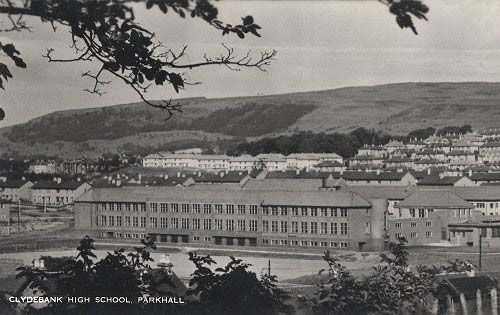
I was a pupil, attending the school from 1997 to 2001. I found the red-brick building impressive, and you could feel its history as soon as you entered. However, there was a strange feeling that you couldn't quite put your finger on. The corridors that always gave me an uneasy feeling were the music and home economics corridors. Those areas always felt as though someone was watching you, quieter, heavier, and far more unsettling than anywhere else in the school. They also seemed colder than any other part of the school.
For others, though, it was room 24, a small lecture room overlooking the gym hall, which gave them an unsettling feeling that they were being watched when no one else was around. This feeling of being watched comes from former pupils and ex-staff members, with one staff member stating they felt someone watching them while working alone in a classroom, just before hearing footsteps, as if someone was running right by them.
Not too far from the Clydebank High School building was the La-Scala Cinema. The state-of-the-art cinema, which opened on Valentine's Day, 14th February 1938, by local MP David Kirkwood, had a capacity of over 2,000 patrons and would come to dominate the Clydebank Skyline for decades to come.
The main feature film shown at the La Scala cinema on 13th March 1941 was Young People, starring Shirley Temple. When the sirens sounded at 9 p.m., many patrons chose to remain inside rather than risk the streets, taking shelter beneath the large balcony. To steady their nerves, they sang long into the night, attempting to drown out the sound of the bombing outside.

As the raid intensified during the night, the reality of the destruction drew ever closer. Casualties were reportedly brought into the cinema, including victims from a nearby dance hall that had taken a direct hit, killing 36 people.
Although the cinema survived the Blitz and stood tall amid the surrounding devastation, it did sustain damage and would not fully reopen until 1944.
By the 1960s, as with many cinemas across the country, attendance began to decline as more people turned to television for entertainment at home. In 1969, the La Scala entered a new phase, becoming a dual-purpose venue operating as both a cinema and a bingo hall. By 1983, declining audiences led to the cinema's closure, with the final screening being E.T. the Extra-Terrestrial. The building continued as a bingo hall, and later the former cinema space was converted into a snooker club.
It was during this later period that stories of strange occurrences began to emerge. Staff and visitors reported a persistent feeling of being watched, unexplained footsteps in empty areas, and sudden cold spots throughout the building. The cellar, in particular, developed an unsettling reputation, with some refusing to enter it alone.
More disturbing still were reports of a woman seen within the building. She was described as appearing distressed, as though searching for something. Over time, she became known as "the Grey Lady."
One story tells of a woman purchasing tickets in the foyer when she noticed her young daughter talking to someone unseen. When asked who she was speaking to, the child replied that it was a lady who was sad and looking for her daughter. Alarmed, the mother took her child's hand and immediately left, never staying to watch the film she had purchased tickets for.
In later years, some claimed that psychics supported the idea that the building was haunted by a woman searching for her lost child. Whether these accounts reflect something unexplained or are shaped by memory and storytelling, they raise a compelling question: could these experiences be connected to the events of March 1941?
In 2016, the building that had survived the bombs of Adolf Hitler was reduced to rubble, making way for modern flats. Yet even now, some believe the Grey Lady never left and that she still walks the ground where the cinema once stood, forever searching for the child she lost.


Comments